
What a standard inspection misses
A general home inspection looks at the roof, the electrical panel, the heater and visible plumbing. It usually does not run a camera down the sewer line, because the pipe is buried. Yet a failing lateral can cost far more to fix than a worn faucet or a dated water heater.
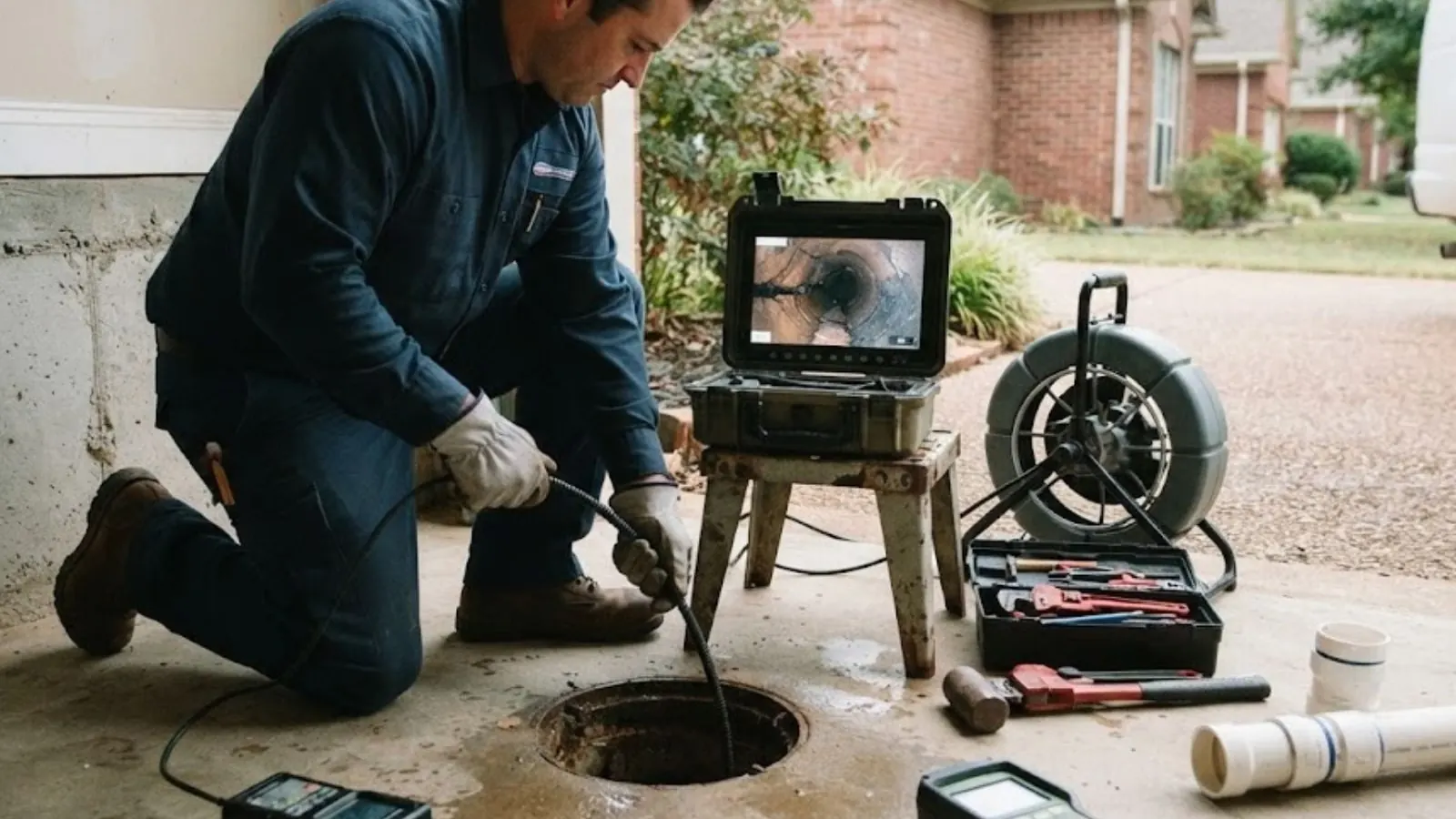
A camera inspection fills that gap. A technician feeds a camera through the cleanout and records the pipe's interior, noting cracks, roots, sags and offsets, with distance markers so any repair can be located. You get a video and a short written note.
What the camera can show a buyer
Root intrusion
Fine roots at joints mean water is escaping. The line may need cutting and repair.
Cracks and offsets
Cracks or shifted joints can leak and collapse over time.
Belly or sag
A low spot holds waste and causes repeat clogs.
Heavy scale or grease
Narrowed pipe reduces capacity. Cleaning may restore it.
Pipe material
Clay, cast iron and plastic each have known failure patterns.
Using the findings in negotiation
| Finding | Typical response | Buyer's move |
|---|---|---|
| Clean, sound pipe | No action | Proceed with confidence |
| Roots or buildup | Cleaning and monitoring | Ask for cleaning or a credit |
| Cracks or offsets | Spot repair or lining | Request repair or price reduction |
| Collapsed or bellied sections | Replacement | Renegotiate or reconsider |
| Line not accessible | Install a cleanout | Ask the seller to add one |
How to schedule it
Book the inspection during your inspection period so the findings can still affect the deal. Ask your agent for permission and a cleanout location. If the seller has no cleanout, the technician may need to pull a toilet to reach the line. Make sure the seller agrees to that in writing.
Pay for the inspection yourself and keep the video. If the findings are good, you have evidence of the home's condition. If they are poor, you have a basis for negotiation. Share the video with your agent and, if needed, with a second plumber for a quote.
What to know about Coachella sewer lines
The City of Coachella's Utilities Department operates the sewer main, and the private lateral from the house to the main belongs to the property owner. Older parts of town have older pipe, while newer subdivisions use plastic. The age of the home is a good guide to what material you should expect and what failures to look for.
Some east valley properties use septic instead of sewer. If you are buying outside the sewer service area, a septic inspection and pumping record matter more than a camera run. Ask the seller for the system's service history and the location of the tank.
Source types: City of Coachella Utilities Department page and CEQA notice for the East Coachella Valley Sewer Consolidation Planning Project.
If the camera finds a problem
Do not panic. Many findings are manageable. Roots can be cut and the line can be lined without major excavation. A cracked section can be repaired with a spot dig. Only severe collapses or long bellies lead to full replacement. Get the video in front of a plumber and ask for options, not just a price.
For repair planning, see our sewer line repair page, which explains lining, spot repair and replacement. Ask the seller to repair or credit the cost, and keep the written quote with your closing documents.
After you buy: keep the baseline
Save the video in a folder with your house records. If the line backs up in a year or two, compare the new video to the old one. A change tells you what is developing. A clean baseline also helps you spot roots early and schedule maintenance before a clog turns into an emergency.
Note the cleanout location on a sketch and keep it with your shutoff valve map. Future repairs go faster when everyone knows where to look.
Questions to ask the inspector
Ask how long the camera ran and where it stopped. Ask whether the technician saw standing water in the line and what the pipe material appears to be. Ask for distance markers on each defect. Ask whether the video includes the connection at the street, or whether it ended earlier.
A candid inspector will tell you what they could and could not see. Be wary of vague reports. Specific notes with distances and timestamps let a second plumber check the same spots and give you a firm quote.
How lenders and insurers see sewer lines
Some insurers ask about the sewer lateral for older homes, and certain policies exclude the line itself. A lender will not usually require a camera inspection, but a clean report can help you answer questions that come up during underwriting. If the video shows serious damage, tell your agent early.
Ask your insurance agent whether the policy covers repairs to the lateral and whether a water backup endorsement is available. The answers affect how much risk you carry after closing and whether a repair credit is worth negotiating.
Timing the inspection around closing
Most purchase contracts give you a short window to inspect and ask for repairs. Book the camera visit in the first few days, because a technician may need a day or two to schedule and a second plumber may need time to quote repairs. If you wait until the last day, you lose negotiating room.
Share the findings with your agent the same day. A clear video and a written note let the agent request a repair, a credit or a price change without delay. If the seller resists, a written quote from a licensed plumber shows the request is based on facts.
Common questions
It usually adds an hour to the schedule. The cost is modest compared with a hidden repair.
Sellers usually allow it during the inspection period. Ask your agent to include it in the contract.
The technician can often access the line through a toilet or a roof vent, with the seller's permission.
Usually. Long lines or blockages can limit the run, and the technician notes where it ended.
No. It shows the pipe's condition at the time. Roots and shifting can develop later.