
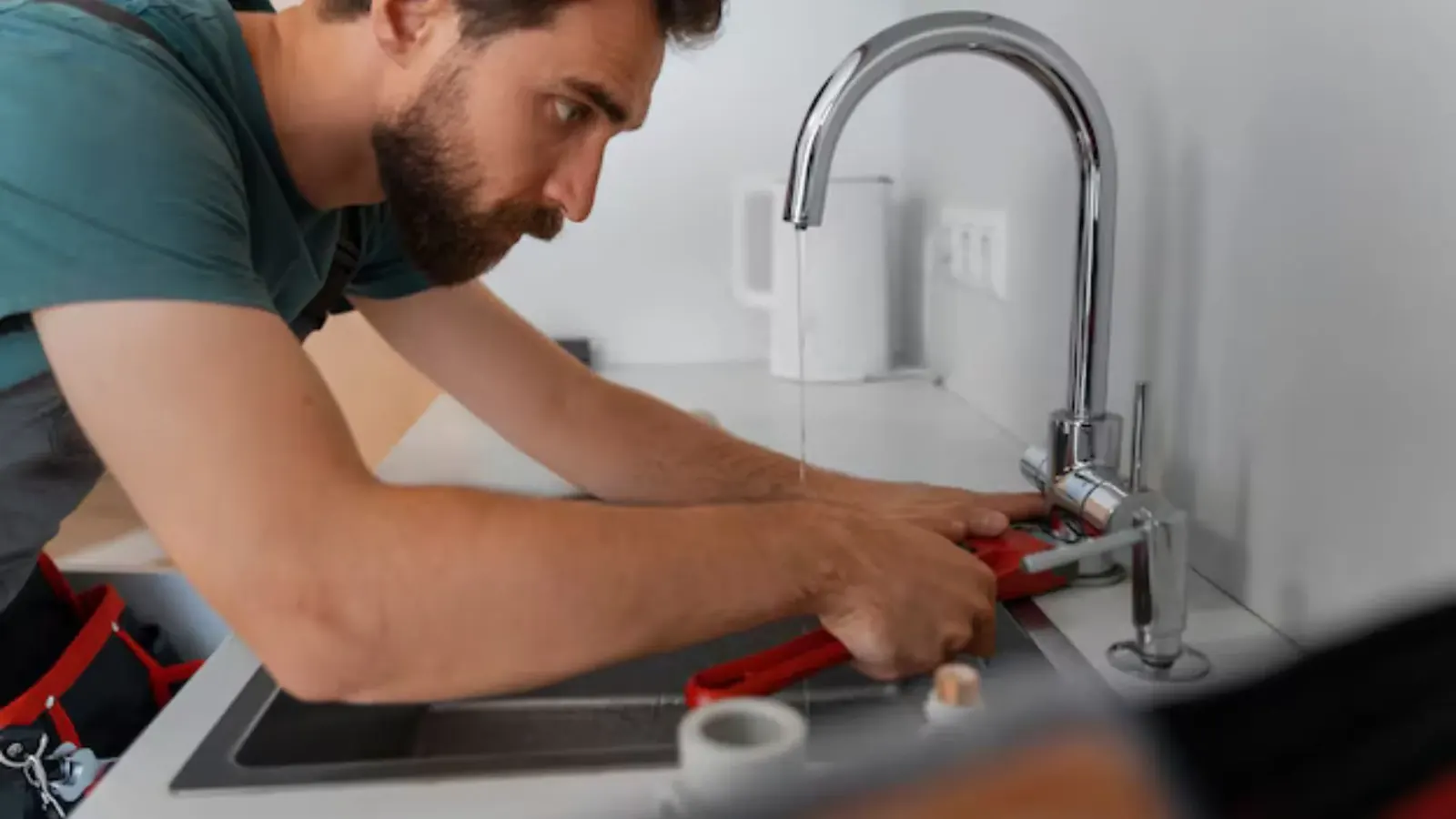
Identify your faucet type first
Kitchen faucets come in four common designs, and each wears out in its own way. Compression faucets use rubber washers and have separate hot and cold handles. Cartridge faucets use a plug-in cartridge. Ball faucets have a single lever with a rotating ball. Ceramic disc faucets use polished discs and are the most durable.
Look at the handle and how it moves. Two handles often mean compression or cartridge. A single lever could be a cartridge, a ball or a ceramic disc. Take a photo before you disassemble so you can match parts at the hardware store.
Tools and parts
- Adjustable wrench and a set of screwdrivers
- Allen keys, since many handles use a set screw
- Replacement cartridge, washers or O-rings matched to your brand
- Plumber's grease for seals
- A towel to plug the drain so small parts do not fall in
- Vinegar and an old toothbrush for aerators
Fixing a drip step by step
Close the angle stops under the sink first. If they do not turn or leak, shut off the main.
1. Turn off the water
Close both stops, then open the faucet to release pressure.
2. Remove the handle
Pry off the decorative cap, remove the screw and lift the handle.
3. Pull the cartridge or washer
Unscrew the cap nut and lift out the worn part. Note the order of washers and rings.
4. Match the part
Bring it to the store. An exact match saves a second trip.
5. Reassemble with grease
Lightly grease new seals and put everything back in order.
6. Test slowly
Turn the stops on and check for drips at the spout and base.
Symptoms and likely fixes
| Symptom | Likely cause | Fix |
|---|---|---|
| Drip from spout | Worn cartridge or washer | Replace the part |
| Water around the base | Failed O-rings | Replace the seals |
| Weak flow | Clogged aerator or stop valve | Clean the aerator, open the stops fully |
| Handle stiff | Scale in the cartridge | Soak or replace |
| Spray hose will not retract | Weight or hose kink | Check under the sink |
When to replace instead of repair
If the faucet is pitted, cracked or more than fifteen years old, parts may be hard to find and the next failure is coming. A new faucet also gives you modern features like a pull-down sprayer. When the sink has a garbage disposal, make sure the new faucet fits the sink holes and leaves room to reach the stops.
Replacing a faucet is a common DIY job, and a plumber can do it in about an hour. Replace the supply lines and stops at the same time. Old braided lines and multi-turn stops are cheap insurance against the next surprise.
Hard water and aerators in the valley
Mineral deposits are the quiet cause of many faucet problems here. The Coachella Valley Water District reports hardness by service area in its annual water quality report, and values vary widely across its communities. Where water is hard, aerators clog, cartridges stiffen and chrome spots with white crust.
Soak aerators in white vinegar for an hour every few months. If the crust returns fast, consider testing your tap and talking to a plumber about whether a softener makes sense. The test result tells you how aggressive your water is and how often to maintain fixtures.
Source type: Coachella Valley Water District annual water quality report.
Leaks under the sink matter more than drips above it
A drip from the spout wastes water and annoys you. A leak under the sink rots the cabinet, grows mold and can soak the floor. Check the supply lines, the stops and the trap each time you fix the faucet. Dry the area and feel for moisture with a paper towel.
If you find a wet spot you cannot trace, stop and call. A small leak at a stop valve can turn into a flood when you turn it. Our faucet repair visits include a check of the supply connections for that reason.
Reading the signs before you buy a new faucet
Check the sink for the number of holes. One hole, three holes and four holes call for different faucet styles, and an escutcheon plate can cover extra holes if you choose a single-handle model. Measure the distance between handles on a three-hole sink so the new faucet fits.
Check depth under the sink too. Pull-down faucets need room for the hose weight to hang freely. A deep drawer or a disposal can block that space. A quick measurement avoids a return trip to the store.
Keeping a repaired faucet working
Wipe the faucet dry and clean the aerator every few months. Avoid cleaning with harsh chemicals that eat finishes. Exercise the angle stops twice a year by turning them off and on so they do not seize. If a handle starts to feel rough, replace the cartridge before the surface wears further.
Keep a note with the brand and model, and store spare O-rings and a cartridge in a labeled bag under the sink. The next repair then takes ten minutes, and you can do it without a trip to the store.
Choosing a finish that lasts
Chrome and stainless are durable and easy to clean. Matte black and brushed brass look good but show spots from hard water faster. Whatever finish you pick, wipe it dry regularly and avoid abrasive cleaners that scratch the surface.
Look for solid brass bodies and ceramic disc cartridges. Cheaper faucets with plastic internals wear out sooner. A faucet with a good warranty and widely available parts is easier to keep running for years.
Common questions
A worn cartridge, washer or valve seat is the usual cause.
Remove the old one and bring it to the store, or look for the brand and model on the faucet.
Usually a clogged aerator or a partly closed stop valve.
Yes. Old lines are inexpensive to replace and prevent a later leak.
It can. Check your utility's report or test your tap, and clean aerators regularly.