
What the job involves
A garbage disposal grinds food scraps and pushes them into the kitchen drain. It mounts to the bottom of the sink drain opening, so a good install depends on a solid mounting ring and a leak-free seal. The motor needs power, either through a plug under the sink or a hardwired connection controlled by a wall switch.
Most replacements are the same job in reverse and forward. You remove the old unit, clean the sink opening, mount the new one and reconnect the drain. New installs where no disposal existed also require a switched power source, which is the part that most often needs an electrician or plumber.
Tools and parts checklist
- The new disposal and its mounting kit
- A screwdriver and an adjustable wrench or pliers
- Plumber's putty or the gasket supplied in the kit
- A new tailpiece and drain trap parts if the old ones are corroded
- A dishwasher drain connector if you have a dishwasher
- A bucket, towels and rubber gloves
- A power cord kit if the unit is plug-in
Installation in six steps
Turn off the breaker for the disposal circuit before you start. Test with a voltage tester before touching wires.
1. Remove the old unit
Disconnect the drain trap and the dishwasher hose, then twist the unit off its mounting ring.
2. Clean the sink opening
Remove old putty and check for cracks. A damaged sink flange leaks no matter how good the new disposal is.
3. Mount the new flange
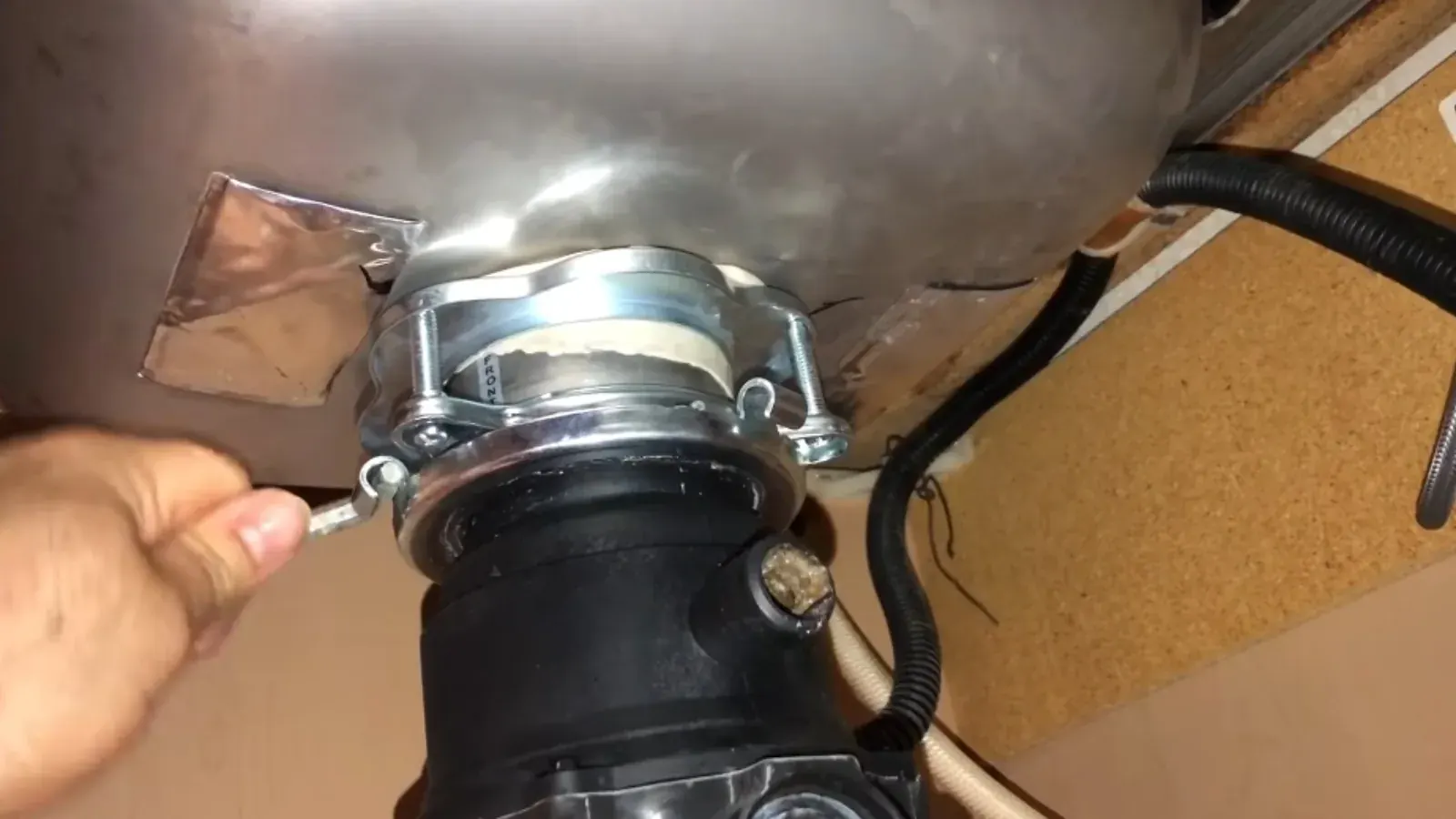
Seat it in putty, press it into the opening and tighten the mounting ring from below.
4. Connect power
Plug in or wire according to the instructions. Hardwired units are easiest to place when a licensed electrician or plumber handles the connection.
5. Attach the drain
Connect the discharge to the trap. Remove the dishwasher drain knockout plug if you have a dishwasher.
6. Test for leaks
Run water, switch on the unit and watch every connection. Tighten and retest.
The dishwasher plug people forget
A new disposal has a small knockout plug where the dishwasher drain connects. If you leave the plug in and attach the dishwasher hose, the dishwasher will not drain. If you remove the plug and do not connect a dishwasher, the opening leaks. Drop the knocked-out plug out of the disposal body, because it can jam the grinder.
This one small detail causes more callbacks than any other. Check the instructions for your model and test the dishwasher at the end of the job.
DIY or call a plumber?
| Situation | DIY reasonable? | Why |
|---|---|---|
| Replacing a unit with the same mounting | Usually yes | Parts line up and wiring exists |
| No outlet or switch under the sink | No | Needs electrical work |
| Cracked sink flange | Maybe | Sink repair may be needed first |
| Corroded or leaking trap | Often needs a plumber | Old pipe can break while you work |
| Slow kitchen drain | No | Fix the drain first. See drain cleaning |
Kitchen waste and the Coachella sewer
The City of Coachella's Utilities Department operates the sanitary sewer, and everything you send down the kitchen drain eventually reaches that system. A disposal does not make fats and oils safe to wash away. Grease cools in pipes and builds coatings, and older drain lines scale and narrow, which is why disposal installs in older Coachella homes often reveal a slow drain behind them.
If your property is on septic, as many Thermal homes are, a disposal adds solids to the tank and can shorten the time between pumpings. Ask your septic service whether a disposal suits your system before you install one. Plumbing work in California is checked against the California Plumbing Code, which is based on the Uniform Plumbing Code (UPC). It covers drain connections and traps, which is why a corroded trap should be replaced during the install.
Source types: City of Coachella Utilities Department page and CEQA notice for the East Coachella Valley Sewer Consolidation Planning Project.
What not to put down it
Grease, oils and fat go in the trash, not the sink. Fibrous scraps such as celery, corn husks and artichoke leaves wrap around the blades. Large amounts of pasta, rice and coffee grounds swell and settle in the trap. Bones and fruit pits can jam or damage the grinder.
Run cold water while the unit runs and for fifteen seconds afterward so scraps move well past the trap. Hot water melts grease and sends it farther down the pipe where it cools and clogs. Cold water keeps it solid so the blades can chop it up and it travels as particles.
Safety rules for the job
Never put your hand in a disposal, even when it is off. Use tongs or pliers to retrieve anything dropped inside. Flip the breaker before you touch the unit, and confirm the power is off with a tester. If your disposal is hardwired, the wiring should match the manufacturer's diagram and the local code.
If you are unsure about the electrical work, stop. A licensed plumber or electrician can finish the connection in minutes, and that is cheaper than a shock or a house fire. The plumbing portion of the job is forgiving. The wiring is not.
Troubleshooting a new unit
If the unit hums but does not spin, it is jammed. Switch it off and use the hex wrench slot on the bottom to turn the blades by hand. If it does not run at all, press the red reset button on the bottom. If water leaks at the bottom, check the dishwasher knockout and the drain connection. If it drains slowly, the problem is probably the line behind it.
A disposal that leaks from the housing is defective or damaged and should be replaced under the warranty. Keep your receipt and the packaging until you are sure the unit works. Take a quick photo of the serial plate before you install it, so you have the details if you need support.
Common questions
Often eight to twelve years, depending on use and what goes in.
Only if there is no switched outlet or power source under the sink. A plug-in unit on an existing outlet does not.
The mounting ring or putty seal is not tight. Remove the unit, reseat the flange and retighten.
Check with your septic service first. Disposals add solids that can fill the tank faster.
Rules depend on the work. Ask the City Building Division, which handles plumbing permits.